Aesthetics or Cruelty? An Analysis of the Health Costs Behind Extreme Breeding
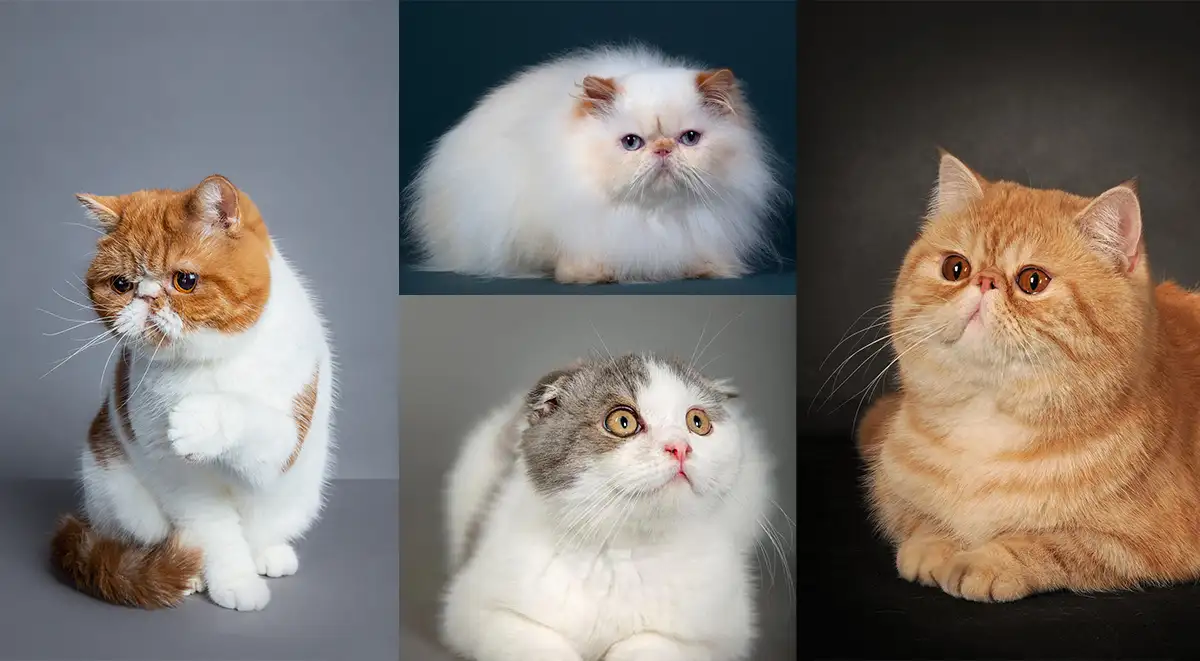
When scrolling through social media, I’m often drawn to the unique appearances of “internet-famous” cats like flat-faced cats and folded-ear cats. Their round, flat faces, big, watery eyes, and soft, folded ears—these distinctive physical traits strike us as both adorable and special.
However, as I’ve gradually learned more about pet breeding, I’ve come to realize a thought-provoking issue: many of the breed characteristics we find endearing are actually the result of long-term selective breeding and the amplification of genetic mutations. Beneath this unique aesthetic façade, many cats may be silently bearing corresponding health risks. Today, from my personal perspective, I’d like to gently discuss the often-overlooked health costs to cats that lie behind extreme selective breeding.
Bella is the cat I have raised. The other breeds below are a research summary, with one friend’s account kept separate from veterinary evidence.
Flat-Faced Cats: Breathing Difficulties in Persians and Exotic Shorthairs
Persians and Exotic Shorthairs are two very familiar flat-faced breeds. To achieve rounded, full facial contours, many breeding programs have long favored individuals with flatter faces. The cumulative effects of this long-term selective breeding have led to significant changes in the facial bone structure of these cats.
The RSPCA’s guidance on brachycephaly describes breathing risks associated with a shortened face, including narrowed nostrils and crowded airways. It does not establish that every flat-faced cat has airway disease.
In addition, their unique facial structure can lead to several associated health issues.
Altered skull shape can affect tear drainage, eye protection and tooth alignment. Persistent tearing, eye discomfort or difficulty eating needs veterinary assessment; tear staining is not inevitable in every flat-faced cat.
Persians and cats with Persian ancestry can inherit polycystic kidney disease (PKD1). UC Davis explains the dominant inheritance and genetic test. Cysts can appear before obvious illness; screening is more useful than waiting for symptoms. This inherited risk is distinct from the mechanical effects of a flat face.
I have a friend who owns a Persian cat named Baozi. When she first brought Baozi home, she thought the sound of its snoring while sleeping was “so cute.” Later, a vet visit made her take its breathing more seriously. I have not seen Baozi’s veterinary records, so I cannot name a diagnosis or treatment from her account.
My friend told me that the moment that broke her heart the most was when Baozi chased a cat teaser for less than two minutes, then suddenly stopped, panting with her mouth wide open. She hadn’t realized before that what she thought was “cute” was actually a burden. Open-mouth breathing or difficulty breathing in a cat warrants urgent veterinary attention; stop activity and contact the vet.
In contrast, when I watch Bella—she can sprint back and forth across the room three times in one go, then jump up onto the windowsill, take a couple of breaths, and be back to normal. That is an observation, not proof that Bella or other British Shorthairs cannot develop breathing problems.
Scottish Fold Cats: The Cartilage Risks Behind Those Adorable Folded Ears
The gentle, docile appearance of the Scottish Fold’s folded ears is why so many people love them. I used to think that folded ears were simply a physical trait, but I later learned that this characteristic stems from a genetic mutation affecting cartilage development.
The folded-ear trait is associated with a variant in TRPV4, which also affects bone and cartilage development. Scottish Fold osteochondrodysplasia can involve abnormal bone growth, painful joints and a stiff tail. Severity and age of onset vary; an apparently comfortable cat cannot be diagnosed by appearance alone. The University of Sydney’s OMIA record summarises the genetic and radiographic evidence.
The British Veterinary Association (BVA) extreme-conformation policy opposes breeding features that harm welfare. Cats with two copies of the Fold-associated variant generally have more severe skeletal disease; mating a Fold with a straight-eared cat does not remove the risk in offspring inheriting the variant. Avoiding Fold-to-Fold matings is not a guarantee of healthy folded-ear kittens.
Munchkin Cats: Short Limbs and Genetic Questions
Munchkins are recognisable for their short limbs. A genetic study of Munchkin cats identified a structural variant in UGDH associated with disproportionate dwarfism. This is not the same variant that produces Scottish Fold ears.
Short limbs change body proportions, but I cannot turn that observation into a measured increase in spinal stress, arthritis or disc disease. The genetic study does not establish those population-wide disease risks. Welfare concerns deserve investigation without presenting an unmeasured outcome as inevitable.
The study found no cats carrying two copies of the variant and proposed that this state may be embryonically lethal. That is an inference from the available genetic and breeding evidence, not direct confirmation of the fate of every embryo.
Sphynx Cats: Care Challenges Without a Protective Coat
With their unique hairless appearance, Sphynx cats have become a favorite among many cat lovers. Their very sparse coat is a major draw for many cat owners; it does not make them hypoallergenic. However, beyond these advantages, their hairless nature also presents many unique care challenges.
A sparse coat provides less insulation and sun protection. Skin oils may need cleaning, but the routine should suit the individual cat; daily bathing and a fixed heated-room temperature are not universal requirements. GCCF’s Sphynx profile discusses warmth, skin care and allergy misconceptions.
HCM has been reported in Sphynx cats, but an inherited predisposition is not the same as heart disease being present at birth. Ask the vet about appropriate cardiac assessment. A separate inherited disorder is congenital myasthenic syndrome (CMS), a recessive neuromuscular condition; it should not be conflated with HCM.
Genetic Health Characteristics of Common Popular Cat Breeds
In addition to the distinctive breeds mentioned above, many well-known popular purebred cats—due to long-term selective breeding and relatively concentrated bloodlines—also carry certain genetic health issues that are common within their breeds. This is a phenomenon that is difficult to completely avoid during the breeding process, and every cat owner should understand and rationally accept it in advance.
These are examples of documented concerns from the sources below, not prevalence estimates or a diagnosis for every cat.
| Breed | Common Health Issues |
|---|---|
| Ragdoll | HCM-associated inherited risk; GCCF recommends checking parental test records. “Sensitive stomach” is not a genetic diagnosis. |
| Maine Coon | HCM and hip dysplasia; GCCF describes screening considerations. |
| Chinchilla Persian | Persian-line PKD1 risk and, depending on facial conformation, breathing or eye problems; coat colour does not determine disease. |
Personal Reflections on Commercial Breeding
In today’s pet market, cats with unique appearances and striking good looks are often more popular and enjoy higher market recognition. As a result, some breeders tend to favor selecting individuals with more distinctive and extreme physical traits.
When breeding favours a feature that impairs normal function, appearance can come at a real welfare cost. That does not mean every unusual-looking cat is ill, or that every disease is caused by appearance.
I was initially drawn to the looks of “internet-famous” cats too. Living with Bella has made me more careful about separating an appealing appearance from an individual cat’s health. Her occasional discomfort does not tell me that a particular breed feature caused it.
Taking a Rational View: The Difference Between Reputable Breeding and Extreme Selective Breeding
While acknowledging these issues, I also believe it’s important to make an objective distinction—we cannot generalize about all purebred breeding practices.
Health-focused breeding uses relevant tests, family history and veterinary examinations. Testing for a known variant only answers that specific question; it does not guarantee lifelong health or exclude every cause of HCM. Cornell explains the limits of cardiac genetic screening.
The important distinction is whether breeding choices protect the cat’s ability to live comfortably. A welfare problem linked to a selected feature does not disappear simply because a breeder is described as reputable.
Finally, I’d like to share my personal thoughts on why I wanted to write an article about cat breeds:
These thoughts came to me one rainy afternoon while chatting with a friend about how her Persian cat had recently been taken to the vet again for breathing concerns; I do not have a confirmed diagnosis. That evening, when I got home, Bella was sleeping on the couch, breathing steadily and occasionally rolling over—a very ordinary scene. But that was the first time I realized: the fact that a cat can breathe so freely, without having to expend extra energy for every leap, is the greatest blessing in itself.
I’ve always believed that true love means respecting the natural state of life itself. It means not blindly chasing extreme physical traits, not paying for morbidly rare aesthetic standards, and treating every little life with a more rational and gentle mindset.